Tony and I had to work on a few different issues simultaneously during the pre-construction phase building our waterfront tiny cabin. These issues included purchasing a property, cleaning up the lot, taking down the cabin in our backyard, and securing the required permits.
Purchase a property
Once Tony and I decided that the only good option to get ourselves out of the pickle were were in was to buy a lot and move the cabin, we contacted our real estate agent to find us some options. If you missed the first blog post in this series where I explained why we are building a waterfront tiny cabin, you can find that post here: Waterfront Tiny Cabin – Part 1: The Why – The Vanderveen House.
We wanted a property that was in a tourist location that would attract guests to rent the cabin. And also in a location that wasn’t too far from where we live. The only lot for sale that met these requirements was a 0.4 acre lot at the end of a gravel road on the Rideau River in Merrickville, Ontario. The location, size of the lot, and privacy made this the perfect location for us. In August 2022, we bought the waterfront lot and started making plans.
Cleaning up the waterfront lot
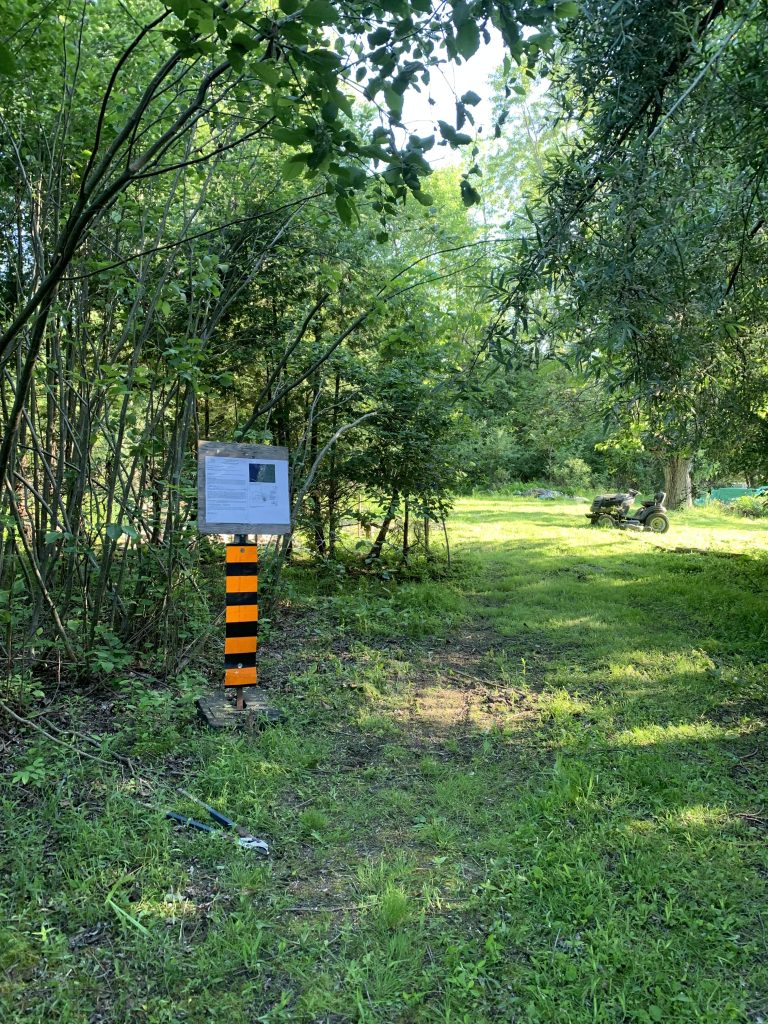
The lot we bought was in a beautiful location. It is right on the Rideau River at the end of a gravel road, just five minutes from Merrickville Ontario. Merrickville is the cutest little historic small town that attracts a lot of tourists. The town is only an hour from Ottawa and Kingston, two hours from Montreal, and three hours from Toronto. We thought it would be a great place for a short term vacation rental.
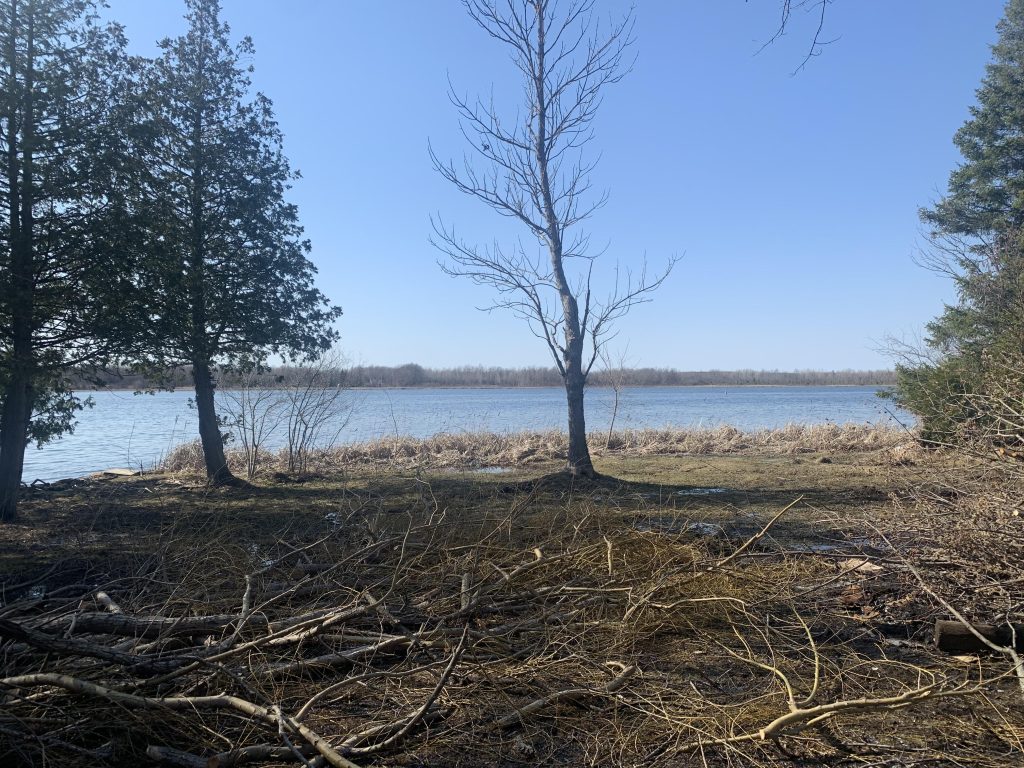
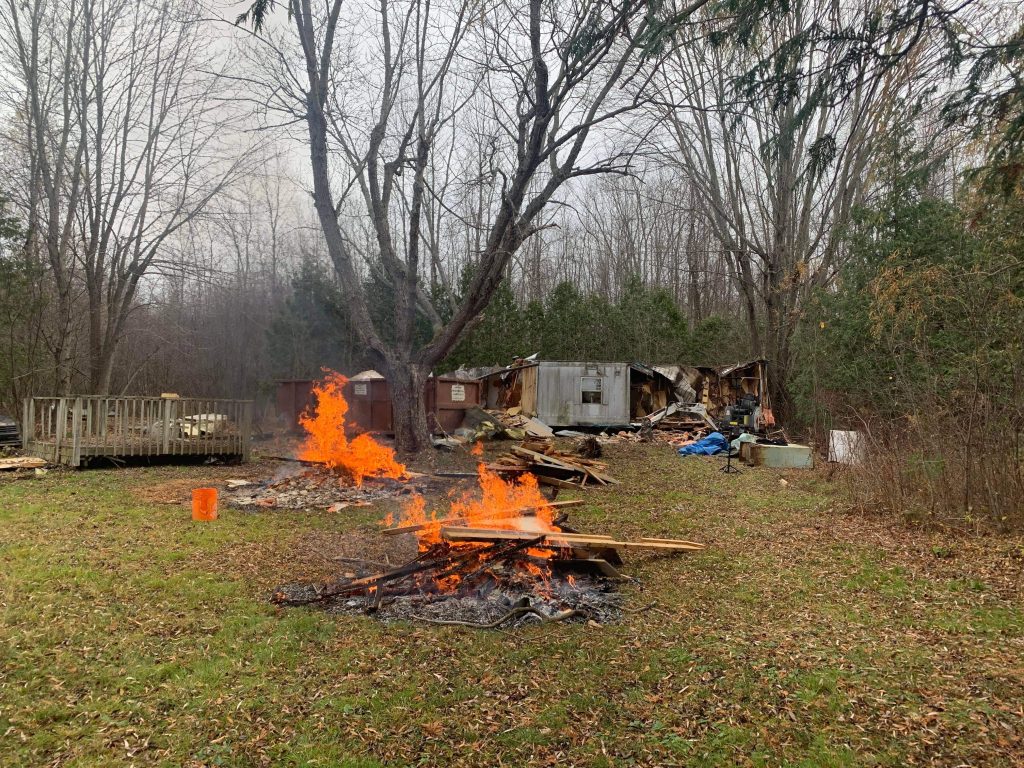
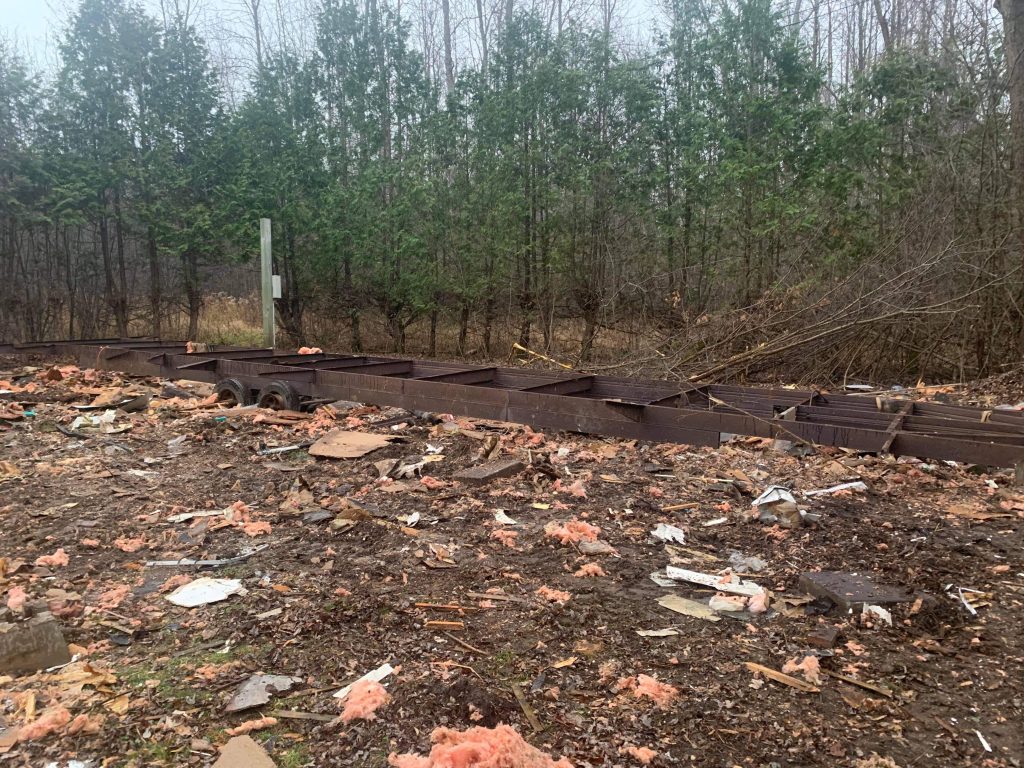
However, the lot we bought was neglected and came with a 40 foot, at least 50 year old vacant trailer. Vacant other than mice and racoons.
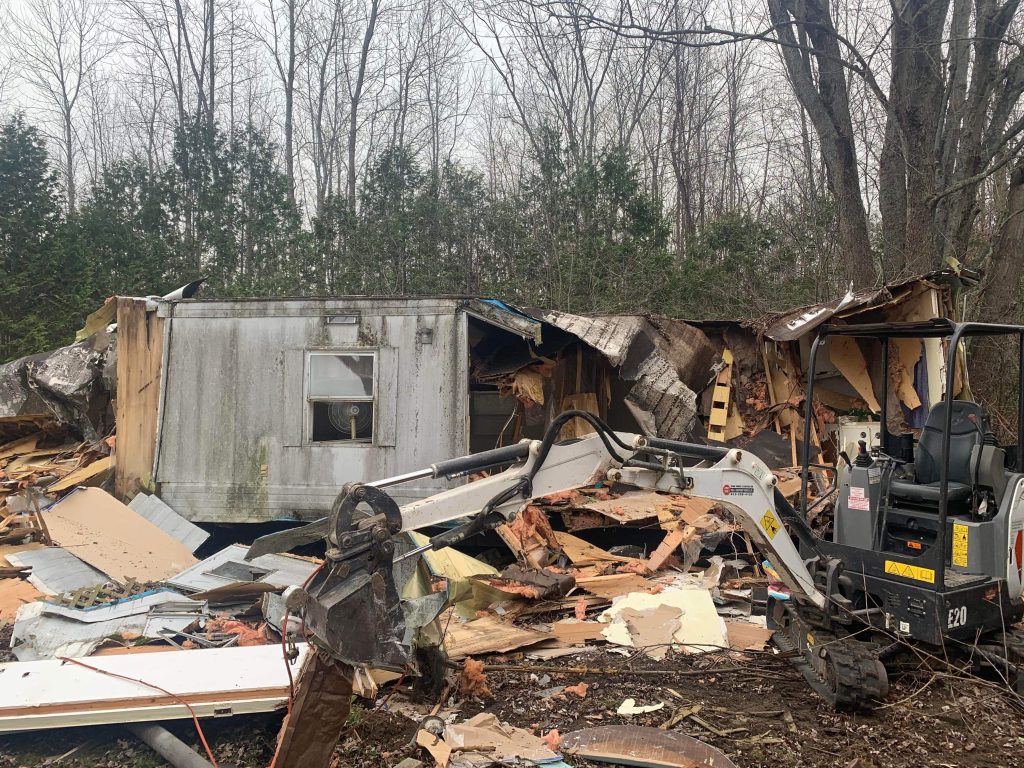
We got a few quotes to have the trailer removed and the lot cleaned up. When it came down to if, it made more sense to demolish the trailer ourselves. On thanksgiving weekend in 2022 we rented a dumpster, a mini excavator, and we got to work tearing apart the trailer, and cleaning up the lot. After a few solid days of work, we had the debris pretty much all cleaned up.
Tearing down the cabin in our backyard
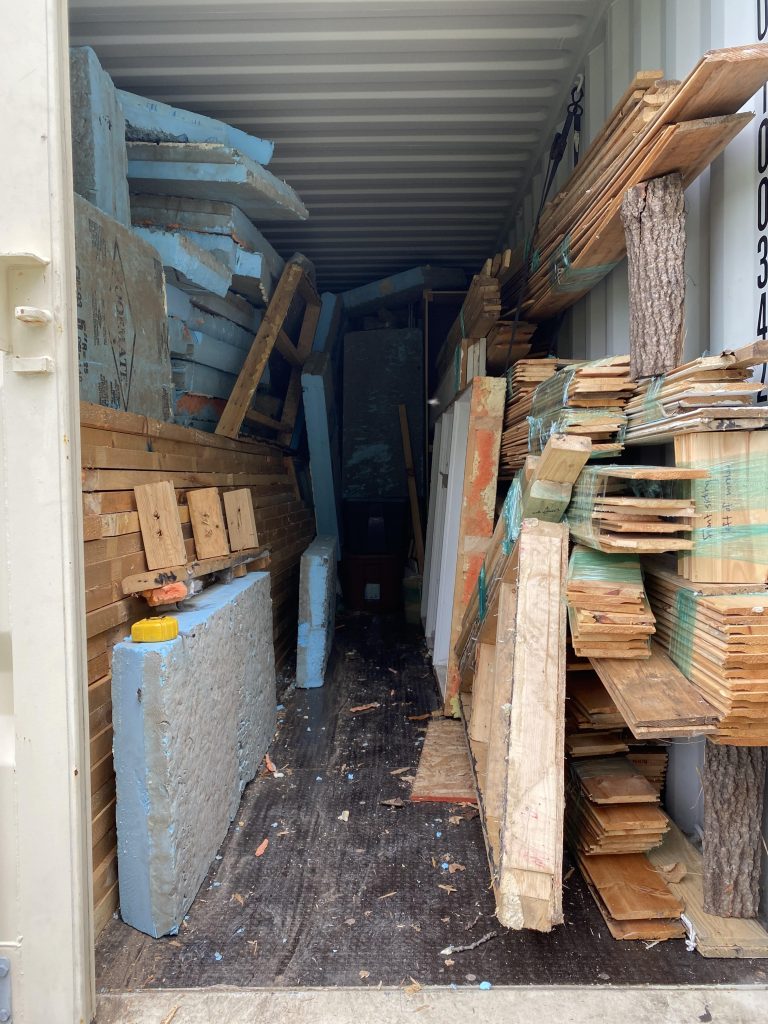
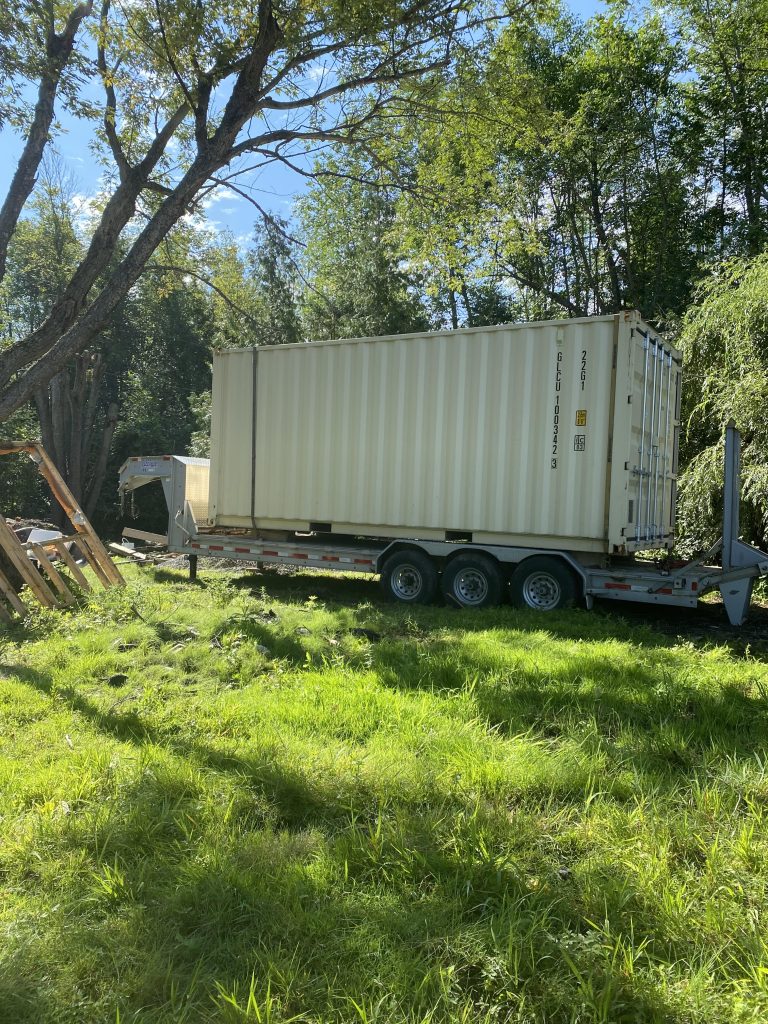
Around the same time that we bought the lot and were clearing it up, we also found a sea container that we were able to have delivered to our property and rented by the month. Then we started taking apart the cabin piece by piece. Everything that was inside the cabin, like the furniture and the cabinets, we removed and stored in our basement. All the finishes, like the trim, interior walls, and exterior siding I took off piece by piece, labelled them, and packaged them together neatly in the sea container.
All the framed walls we took out and put them in the sea container in one piece. We weren’t able to save some things like the flooring and the insulation, but tried to save as much as we could so as to not buy too much when rebuilding. The post and beam framing we stacked on a flatbed trailer and delivered them to the waterfront lot. We took the cabin down and tucked her safely in the sea container before the winter.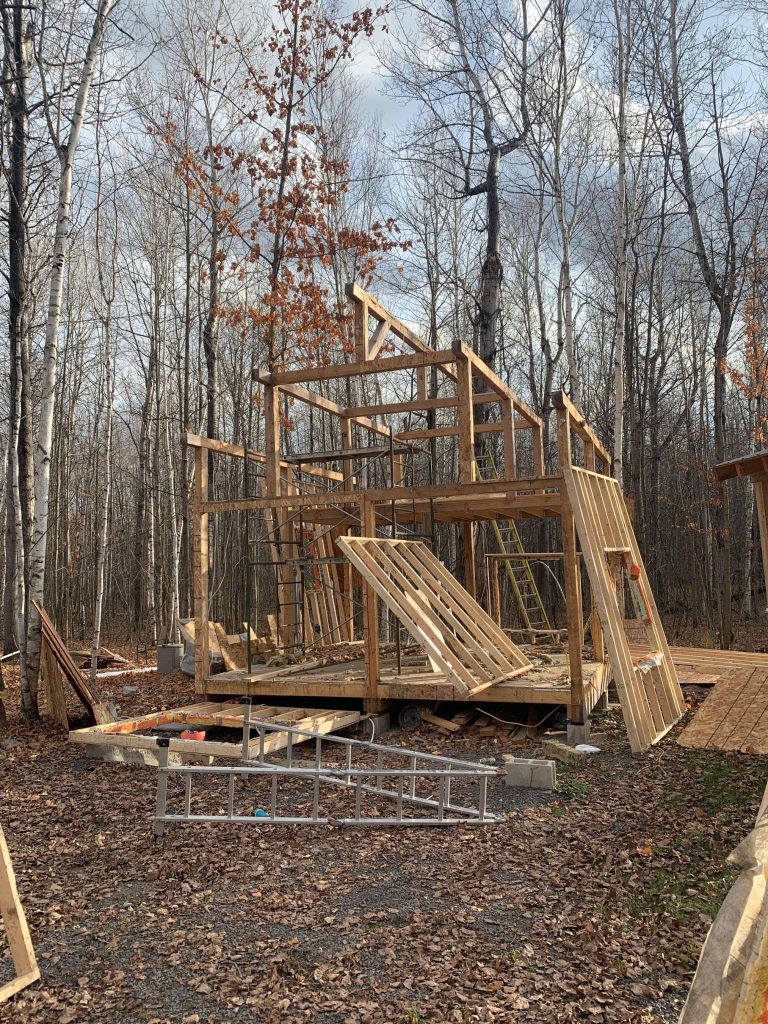
Cutting Down TrEES
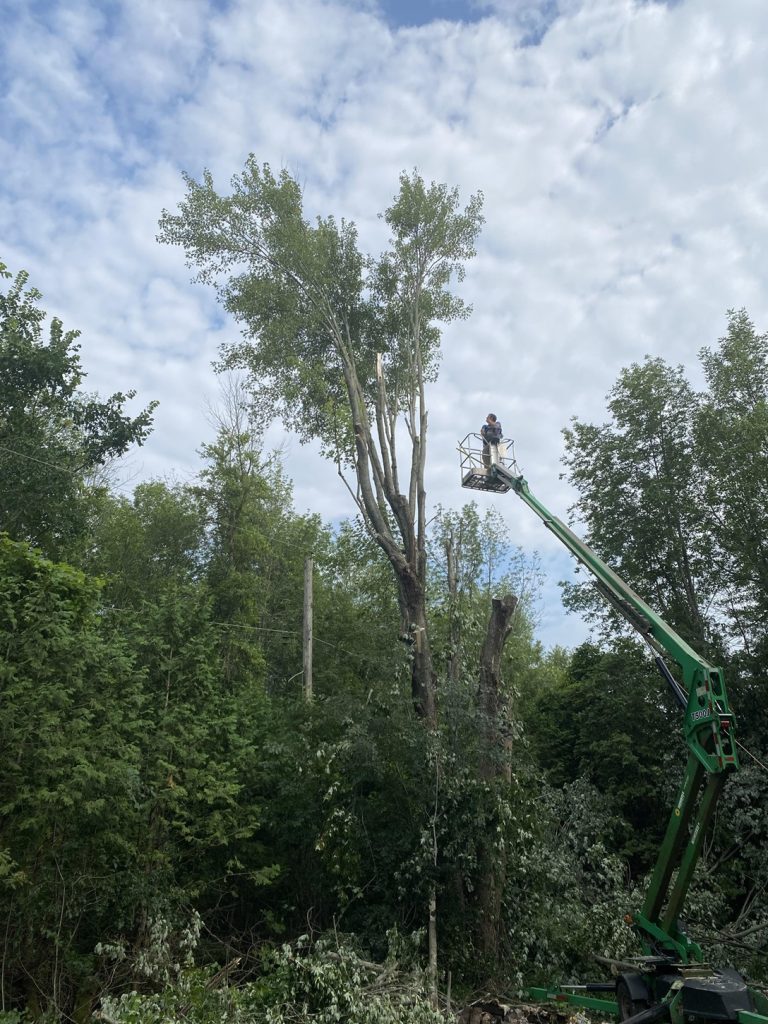
To accommodate the septic bed, there were quite a few trees that we had to cut down. The most difficult one was a 100 foot tall silver maple that had multiple trunks and was leaning close to the power lines. Tony rented a boom and cut the tree up in small parts to do it all safely (I would not recommend trying this yourself unless you have the proper training and safety paraphernalia)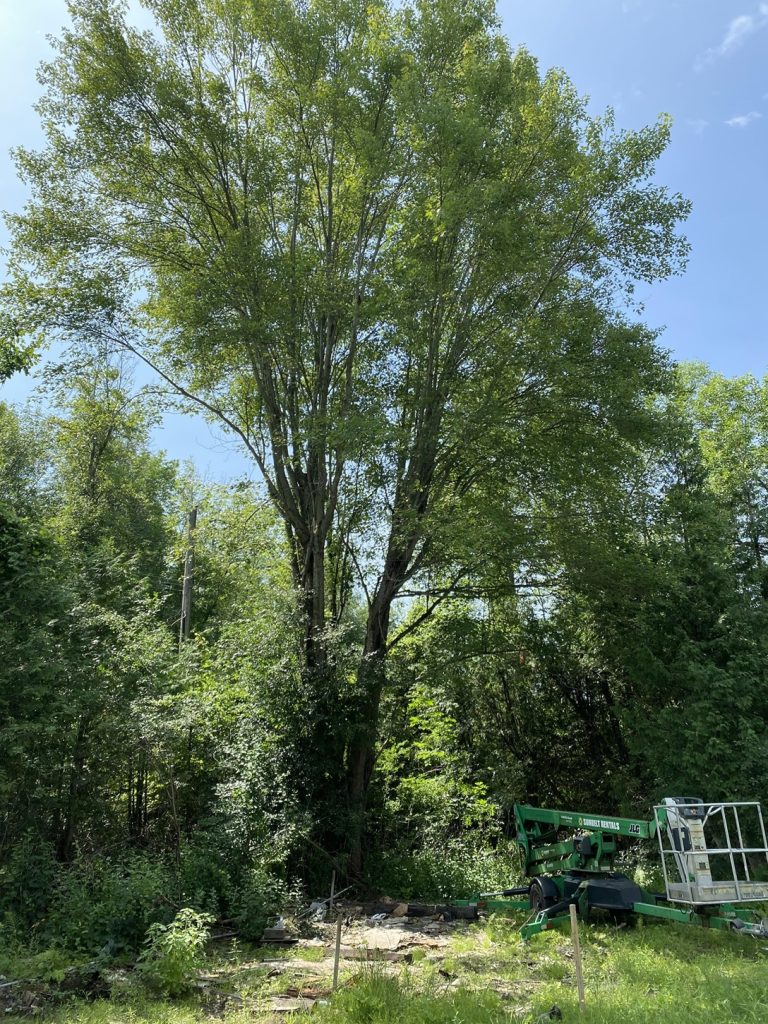
Securing the permits in pre-construction phase
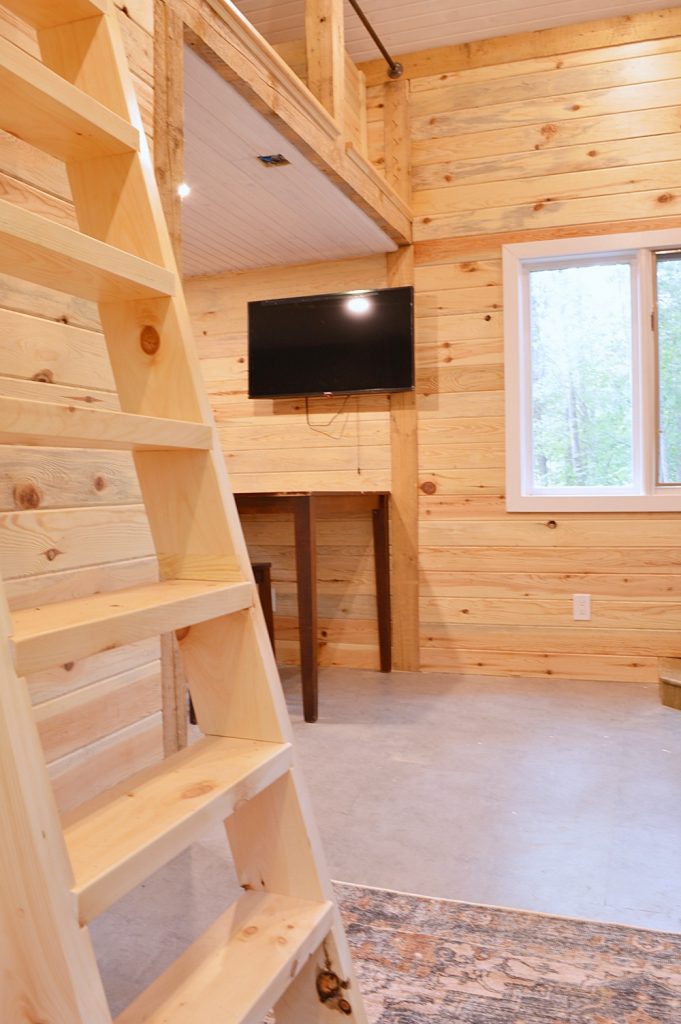
When rebuilding the cabin, we wanted to make sure everything was up to code and we had all our paperwork in order (we learned our lesson the first time around). We started working with the township to get all the paperwork done very early on in the process, starting in the fall of 2022. Tony drew up the building plans and got them stamped by an engineer. One of the issues with the cabin in our backyard was that it had a ladder rather than a set of stairs. We had to figure out how we could incorporate a full set of stairs in tiny cabin. We ended up expanding the cabin by 4 feet which allowed us to get the extra space we needed. The original cabin was 16′ by 16′, but the new and improved cabin is 16′ by 20′.
Since this is a waterfront property, there were a lot of extra hoops to jump through to get permits due to the sensitive nature of the property and the water setbacks. Even though the footprint of the cabin was small, there wasn’t a lot of room taking into account the required setback from the water. We also had to consider the septic bed on the lot and get a permit for that.
We ended up submitting a minor variance and attended a town council meeting to talk about our case. Not a small task when it was a small township and everyone was overworked and behind schedule on everything. It might sound easy, but it was not. There were delays. There were tons of different applications and paperwork to fill out. And there were extra costs that we didn’t plan for. But we were so persistent with the township to keep our file moving forward.
Finally, in July 2023, the township awarded us our building permit. With the permit, that completed the pre-construction phase. Tony and I went out for dinner to celebrate this huge accomplishment. And then we made plans to get to work!


Leave a Reply